Tabbre is perfectly timed to leverage cutting-edge advancements in the key project components that now make the project fully viable. With perovskite solar cells, high-efficiency electrolysis, AI-driven automation, blockchain and innovative maritime construction, Tabbre is set to revolutionize renewable energy.
This convergence of maturing and emerging technologies enables making sustainable energy accessible and economically viable and positions Tabbre to lead the transition from fossil fuels to a clean energy future.
Solar
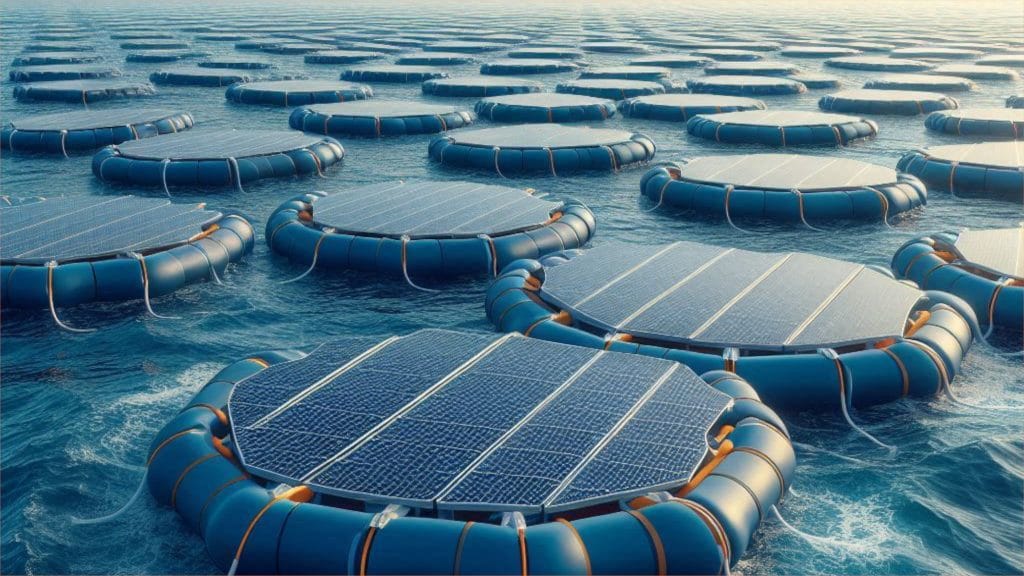
Tabbre is harnessing the power of perovskite solar cells. Highly efficient and cost-effective for large-scale energy production, Perovskites offer superior performance in ocean gyre environments due to their excellent light absorption and stability under harsh conditions.
These solar cells are integrated into flexible, floating structures, maximizing energy capture from the sun. By deploying these advanced solar technologies in remote oceanic gyres, Tabbre aims to generate vast amounts of renewable energy, addressing the intermittency issues of traditional solar power.
Chemical Process
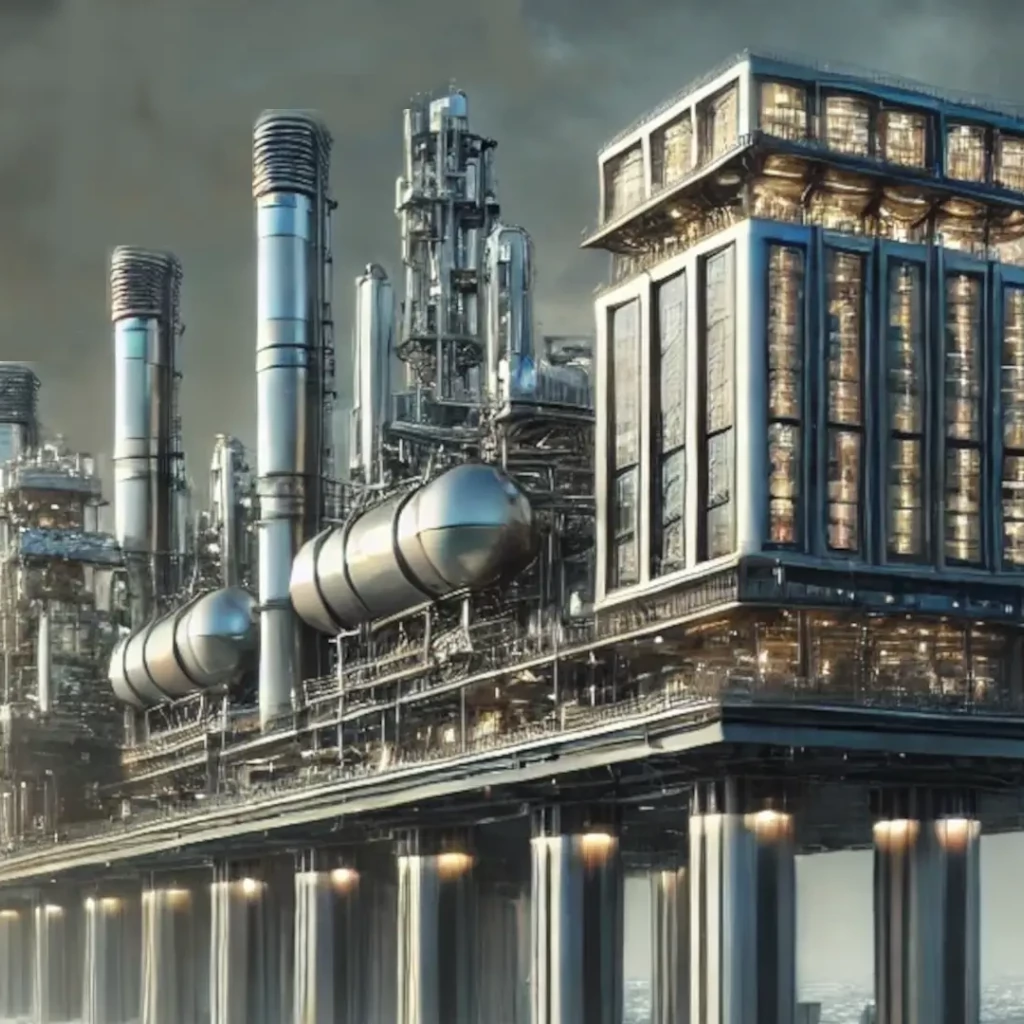
Tabbre partners with pioneers that are making advances in renewable energy infrastructure. Recent developments in electrolysis technology, such as proton-exchange membrane (PEM) and solid oxide electrolysis, have significantly improved the efficiency of hydrogen production
These solar cells are integrated into flexible, floating structures, maximizing energy capture from the sun. By deploying these advanced solar technologies in remote oceanic gyres, Tabbre aims to generate vast amounts of renewable energy, addressing the intermittency issues of traditional solar power.
Engineering
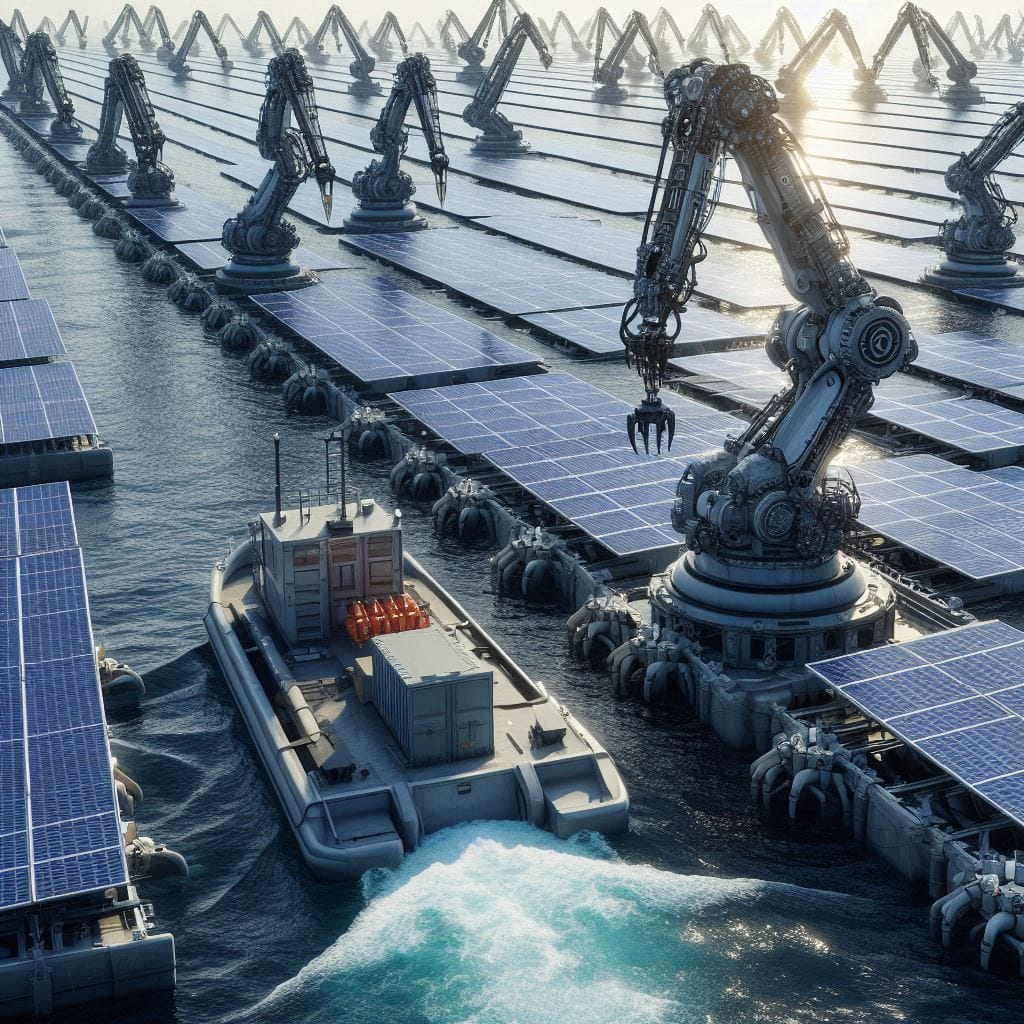
Tabbre’s project involves engineering challenges, including the development of AI-managed harvesters to maintain floating solar panels and collect hydrogen. These ensure optimal performance and efficiency. Automated central processing platforms offload hydrogen to marine transports, streamlining the logistics of transporting clean fuel to ports.
The required engineering build leverages existing technologies, such as offshore platform engineering, however, new designs, such as the AI-managed harvesters, are feasible with current technological advancements. This integration of cutting-edge engineering solutions ensures viability and scalability, paving the way for a sustainable energy future.
Artificial Intelligence
AI is at the core of Tabbre’s operations, enhancing the efficiency and reliability of its renewable energy systems. Advances in robotics and AI agents, such as Google’s RoboCat, enable autonomous operation and maintenance of large scale solar farms. As a result only a limited human workforce will be required to be present to maintain the operation of the facilities.
AI algorithms will optimize energy production, storage, and distribution, ensuring maximum efficiency.
Robotics
Emerging robotic technologies, driven by companies such as Boston Dynamics and Sarcos Robotics, are ideal for Tabbre’s needs. AI-managed harvesters and autonomous maintenance drones, powered by advanced chips from NVIDIA and Texas Instruments, will efficiently manage floating solar panels and collect hydrogen. NVIDIA’s Optimus technology enhances performance and battery life, ensuring reliable operation.
These innovations support the seamless operation of Tabbre’s renewable energy infrastructure, leveraging cutting-edge robotics and AI to drive efficiency and scalability
Maritime
Advances in mercantile vessel construction, including the use of composite materials and automated manufacturing processes, have reduced costs and increased efficiency.
These innovations enable the mass production of durable, lightweight vessels that can support large-scale renewable energy projects. By leveraging these maritime technologies, Tabbre ensures the safe and efficient operation of its oceanic solar farms and bringing product to ports and markets.
Blockchain
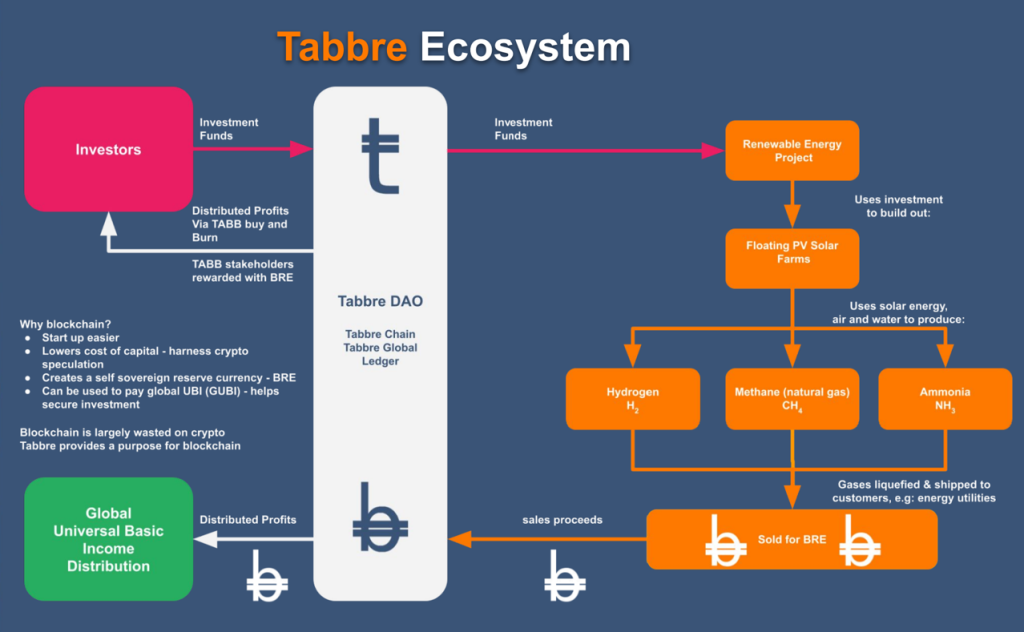
Tabbre is pioneering the integration of its proprietary proof of stake blockchain technology with renewable energy. The decentralized TabbreChain has little environmental impact, supports a two-token ecosystem and runs the DAO. BRE serves as a transaction fee token, with its trading based on the ecosystem’s value, whilst BRE will be the world’s first energy-backed currency, providing stability and value derived from Tabbre’s energy projects.
Node ownership on the TabbreChain enables a democratic stakeholder DAO, empowering individuals in governance and decision-making. It also facilitates the distribution of tokens as a Global Universal Basic Income (GUBI) to all DAO members. This decentralized approach ensures transparency, security, and equitable resource distribution globally, driving the transition to a sustainable energy economy and reducing global poverty.